Your records, your schema
You define what a project, a member, or a job is -- and which fields matter. Not a vendor's idea of your business bent to fit.
the owned platform
The flagship engagement produces one thing: a custom platform, built around how your operation runs, that replaces the software you currently rent. It is not a template or a reseller configuration.
The model is not theoretical. It is the same architecture as the enterprise data platform we built and now operate for an audio/video company (private / NDA) -- a system running pipelines, databases, cloud functions, and AI agents over a real company's live business data.
how it is built
Every system you run today syncs into one place. Projects, contacts, sites, jobs, invoices -- whatever your business actually tracks becomes a record with typed, labeled connections to the others. This is the layer that makes the rest possible.
Your project manager, your bookkeeper, and your front desk each get a tool built for their work -- not one system everyone half-uses. Different screens, different workflows, same underlying records.
Because the data is centralized and structured, questions can be asked in plain language and answered from your own records -- with the exact rows it drew from shown alongside the answer.
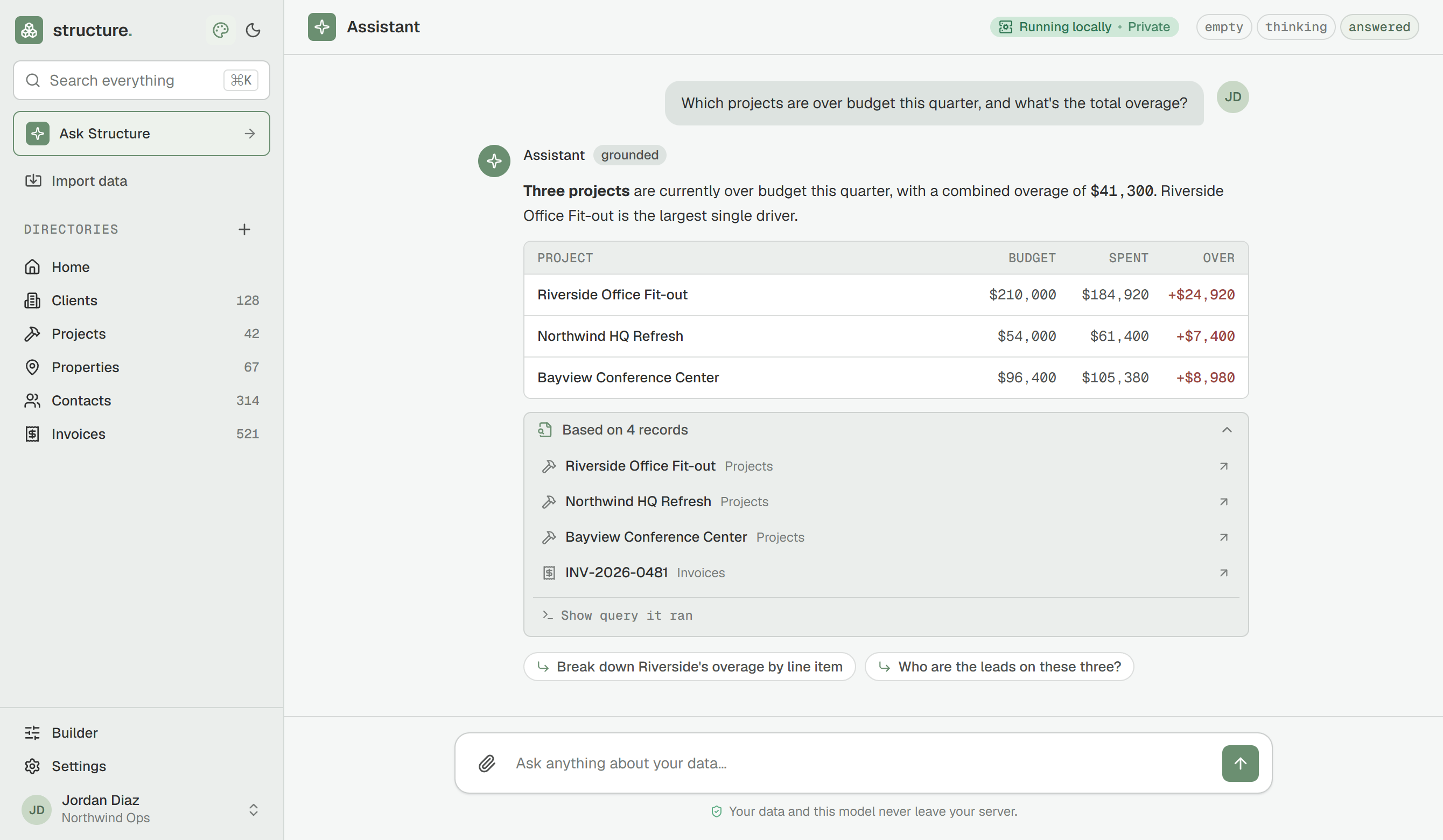
what the backbone does
You define what a project, a member, or a job is -- and which fields matter. Not a vendor's idea of your business bent to fit.
Records link to each other with labeled relationships, so the platform knows a site belongs to a client and a job belongs to both.
Existing systems feed in rather than being ripped out on day one. The platform becomes the record of truth while the operation keeps running.
New directories, fields, and tools get added as the business changes. You are not filing a feature request with a vendor.
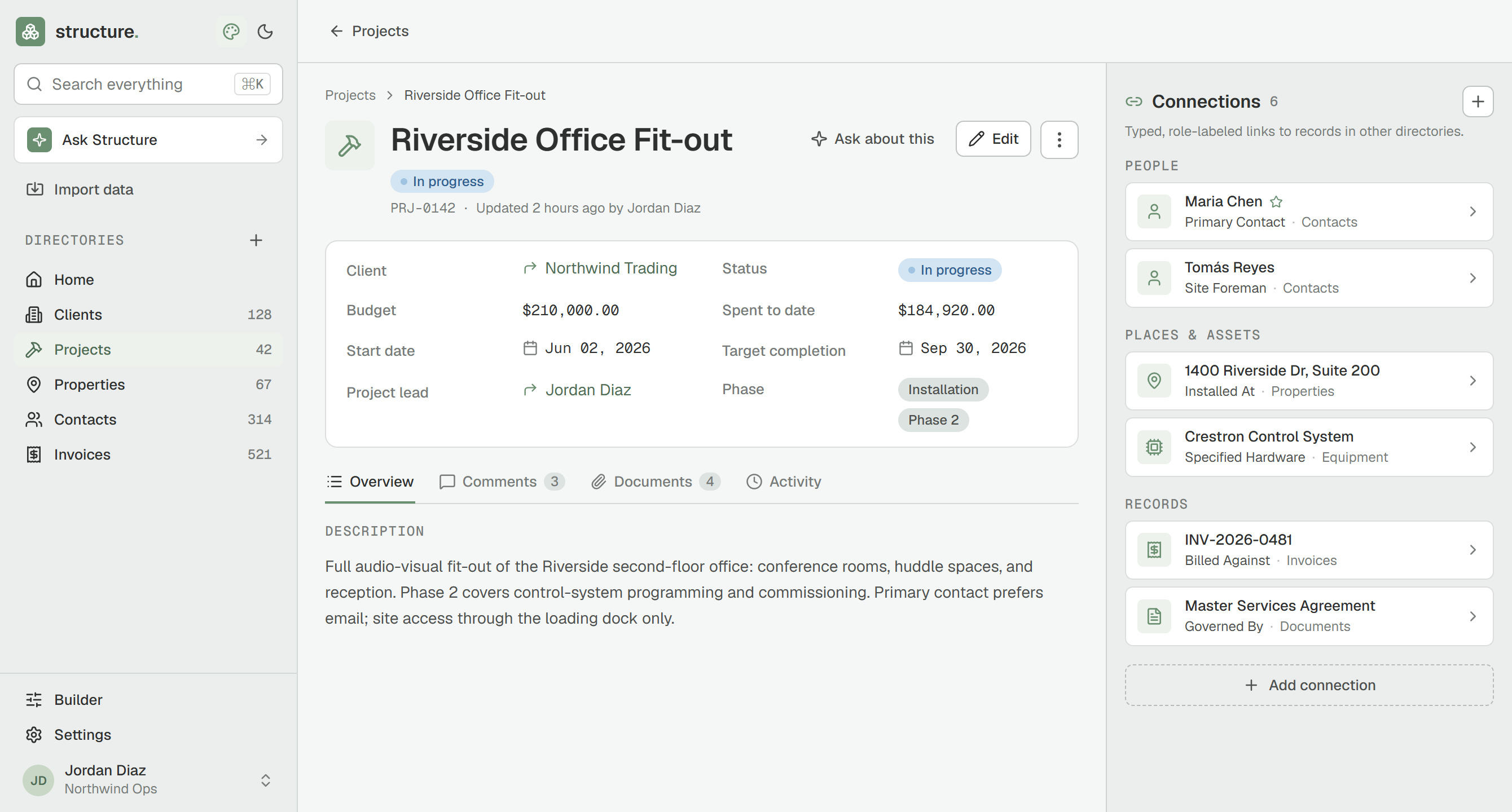
how the engagement fits
why it matters
At handover you own the platform your business runs on -- and the data inside it is finally worth asking questions of.
We go through what you run today, what it costs, and whether an owned platform is the right answer for your operation.